Supraphon
Czech record label specializing in classical and popular music.
Supraphon is a Czech record label founded in 1932, initially as a trademark for export albums by Ultraphon. After nationalization and several name changes, it became a major state-owned label in Czechoslovakia, focusing on classical and popular music with an emphasis on Czech and Slovak composers. It has since become a key distributor for Warner Music Group and was acquired by Sony Music Entertainment in 2025.
- born
- 1932 (trademark registered)
- field
- Record label
- nationality
- Czech
- known_for
- Publishing classical and popular music by Czech and Slovak composers; extensive catalog of works by Smetana, Dvořák, Janáček, Martinů, and Zelenka
Lore & Background
The Supraphon name was first registered as a trademark in 1932, used for domestic albums produced for export by Ultraphon. After World War II, Ultraphon was nationalized and renamed Gramofonové závody, then Gramofonové závody – Supraphon in 1961, and simplified to Supraphon in 1969. In Czechoslovakia, it was one of three major state-owned labels, alongside Panton and Opus. By January 2013, Supraphon became the official Czech distributor for Warner Music Group, and Panton is currently a division of Supraphon. In January 2025, Sony Music Entertainment announced its acquisition of Supraphon.
Reader's Guide
Supraphon's significance lies in its systematic cataloging of works by major Czech composers such as Bedřich Smetana, Antonín Dvořák, Leoš Janáček, Bohuslav Martinů, and Jan Dismas Zelenka, as well as international artists. Its archives include recordings by the Czech Philharmonic under conductors like Václav Talich and Karel Ančerl, and non-Czechoslovak artists such as Sviatoslav Richter and Mstislav Rostropovich. The label pioneered stereo recordings in 1961, quadraphonic sound in the 1970s, and digital recording from 1981, with CDs produced from 1984. It also collaborated with contemporary interpreters like the Pavel Haas Quartet, whose recordings earned BBC Music Magazine's 'Chamber Choice'. The label's legacy includes international recognition, such as the Ampex Golden Reel Award for a cooperative album with American company Lamon Records in 1988.
Did You Know?
- Supraphon's first stereo records were issued in 1961, though recordings were in the format from 1958.
- In the 1970s, Supraphon made some records in four-channel stereo using the quadraphonic (SQ) system.
- Supraphon's first CDs were produced in Japan in 1984.
- The Moody Brothers' album 'Friends' (1988) won the Ampex Golden Reel Award.
Origins & Corporate Evolution
The Supraphon name traces back to 1932, when it was registered as a trademark for domestic albums that Ultraphon produced specifically for export markets. The post-war period brought dramatic upheaval: Ultraphon was nationalized and rebranded as Gramofonové závody. Through the 1960s, the identity evolved again—first to Gramofonové závody – Supraphon in 1961, then simply Supraphon by 1969. For decades, the label operated as one of three major state-owned record companies in Czechoslovakia, alongside Panton and Opus. The corporate landscape continued to transform in the years that followed. By January 2013, Supraphon had become the official Czech distributor for Warner Music Group, a role that expanded when Warner absorbed EMI Czech Republic. Panton was folded into Supraphon as a division, while Opus, based in Slovakia, went its own way after the break-up of Czechoslovakia and was later acquired by Warner in 2019. The most recent chapter arrived in January 2025, when Sony Music Entertainment announced its acquisition of Supraphon, marking yet another significant shift in the label's ownership.
Classical Catalogue & Artistic Legacy
Supraphon's artistic mission produced a catalogue that stands as a comprehensive map of Czech classical music. The label systematically documented the works of Bedřich Smetana, Antonín Dvořák, Leoš Janáček, Bohuslav Martinů, and Jan Dismas Zelenka, while also reaching beyond national borders to include international composers. The Czech Philharmonic Orchestra featured prominently, captured under the batons of Václav Talich, Karel Ančerl, Karel Šejna, and Václav Neumann. The archives also hold performances by world-class soloists and ensembles, including Sviatoslav Richter, Emil Gilels, Mstislav Rostropovich, Ida Haendel, Henryk Szeryng, Hélène Boschi, and André Gertler. Many of these recordings have been reissued in special editions such as Archive, Ančerl Gold Edition, and Talich Special Edition. The label's commitment to living music has continued into the twenty-first century, with the Pavel Haas Quartet earning BBC Music Magazine's "Chamber Choice" designation, and collaborations with conductors like Jiří Bělohlávek and Sir Charles Mackerras. The Collegium Marianum has also contributed to the label's ongoing output.
Technical Pioneering & Format Innovation
Supraphon's technical history reveals a label consistently at the forefront of audio innovation. Although stereophonic recordings were made as early as 1958, the company's first stereo records were not issued until 1961, and its earliest stereophonic pop recordings date to 1964. In the 1970s, the label experimented with quadraphonic sound using the SQ system, producing notable releases such as a two-LP set of Smetana's Má Vlast performed by the Czech Philharmonic under Václav Neumann in 1976. The digital era brought further milestones: Supraphon began recording in digital format in 1981, and its first CDs were pressed in Japan in 1984. The label extended its CD programme to popular music starting in 1987. This trajectory—from early stereo to quadraphonic experiments to digital and compact disc—reflects a sustained commitment to pushing the boundaries of how music was captured and delivered to listeners across several decades of technological change.
Cross-Border Collaborations & Popular Music
While Supraphon is most closely associated with classical repertoire, its catalogue also embraces popular music and international collaboration. A landmark moment came in 1988, when Grammy-nominated artists The Moody Brothers traveled to Prague to record an album with Czech musician Jiří Brabec and the group Country Beat. The resulting record, Friends, represented the first country music cooperative production between an American company, Lamon Records, and Supraphon. The project earned critical acclaim and won the Moodys, Brabec, and the producers, engineers, and studios involved the Ampex Golden Reel Award. This collaboration demonstrated that Supraphon's reach extended well beyond the concert hall, bridging American country traditions with Czech musical sensibility. The label's broader orientation toward popular music, combined with its classical foundation, created a uniquely diverse catalogue that served both art-music connoisseurs and mainstream listeners throughout the twentieth and twenty-first centuries.
Gallery
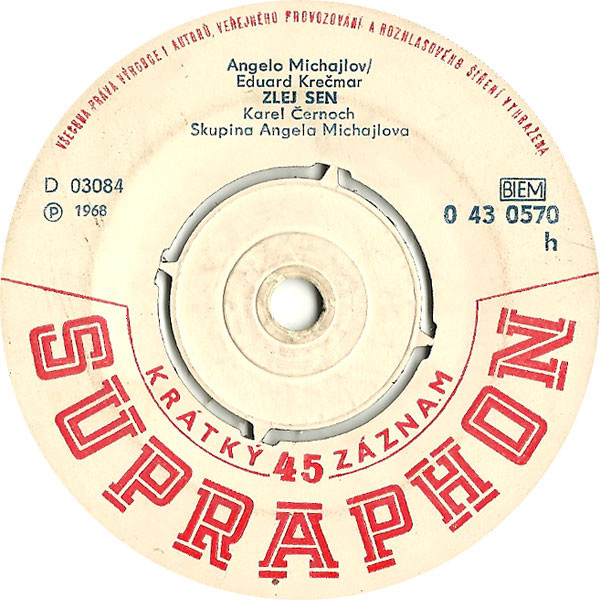
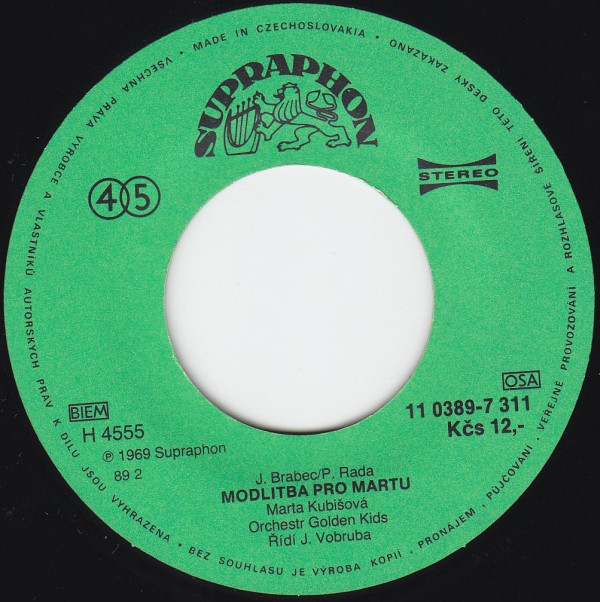
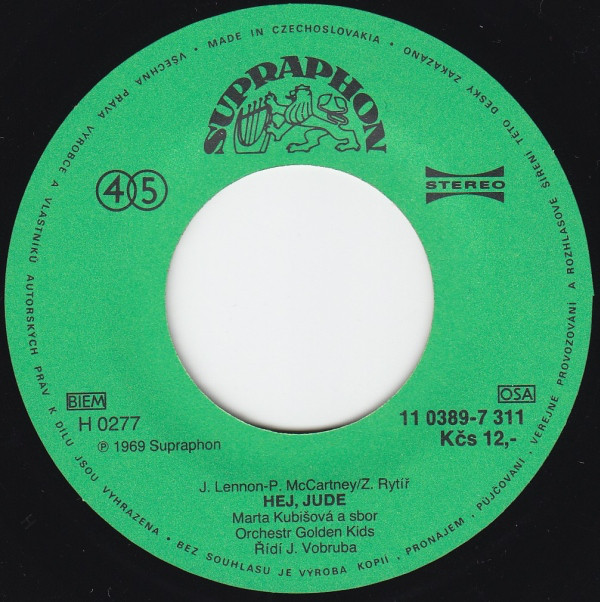
Frequently Asked Questions
What is Supraphon?
Supraphon is a Czech record label that traces its origins to 1932, when it was registered as an export trademark under Ultraphon. Following nationalization and a series of rebrandings, it grew into one of Czechoslovakia's principal state-owned music publishers.
What kind of music does Supraphon release?
The label specializes in classical and popular recordings with a particular emphasis on Czech and Slovak composers. Its catalog is especially rich in works by Smetana, Dvořák, Janáček, Martinů, and Zelenka.
How did Supraphon become a state-owned label?
What began as a private export mark was absorbed into the state sector after political changes in Czechoslovakia, undergoing several name changes along the way. It then operated for decades as a government-controlled publisher of music.
What is Supraphon's current status after the fall of communism?
In the post-communist era, Supraphon shifted into a key distribution partner for Warner Music Group in the region. In 2025, the label was acquired by Sony Music Entertainment.
Why is Supraphon important to classical music fans?
During the state-label era, Supraphon was one of the few channels through which recordings of major Bohemian and Slovak composers reached the public. Its deep catalog of those works remains a go-to reference for listeners seeking authentic Czech classical repertoire.
More in State-owned record labels 1-21
Spotted an error? Know more?
This is a living reference — every entry is fact-audited, and reader corrections feed straight into our audit queue. Suggest an edit · See this site's audit record