
Electrecord
Romanian record label founded in 1932.

Wikipedia / Wikimedia Commons
Electrecord is a Romanian record label founded in 1932. It became a major company in the field of music production in Romania, particularly known for the large number of LPs released on the Romanian music market. The label was originally established by Jewish merchant Nathan Mischonzniki, who purchased old equipment from Germany and brought it to Bucharest.
- founded
- 1932
- founder
- Nathan Mischonzniki
- field
- Record label
- nationality
- Romanian
- known_for
- Large number of LPs released on the Romanian music market
Lore & Background
In 1932, Jewish merchant Nathan Mischonzniki purchased some old equipment from Germany, brought it to Bucharest, and put it into operation. The new record factory was named 'Electrecord'. Until 1937, not having its own studio, the factory dealt with duplicating and multiplying records from abroad, with any Romanian recordings being made abroad at the German company 'Kristall'. That year, the first recordings were produced with its own means. During 1939–1940, the circulation of records amounted to about 70 thousand annually. The company offered its services to the Radio, the Ministry of Propaganda, the Society of Romanian Composers, the local branches of the 'Columbia' and 'Odeon' houses, as well as to companies wishing to have their audio advertisements printed.
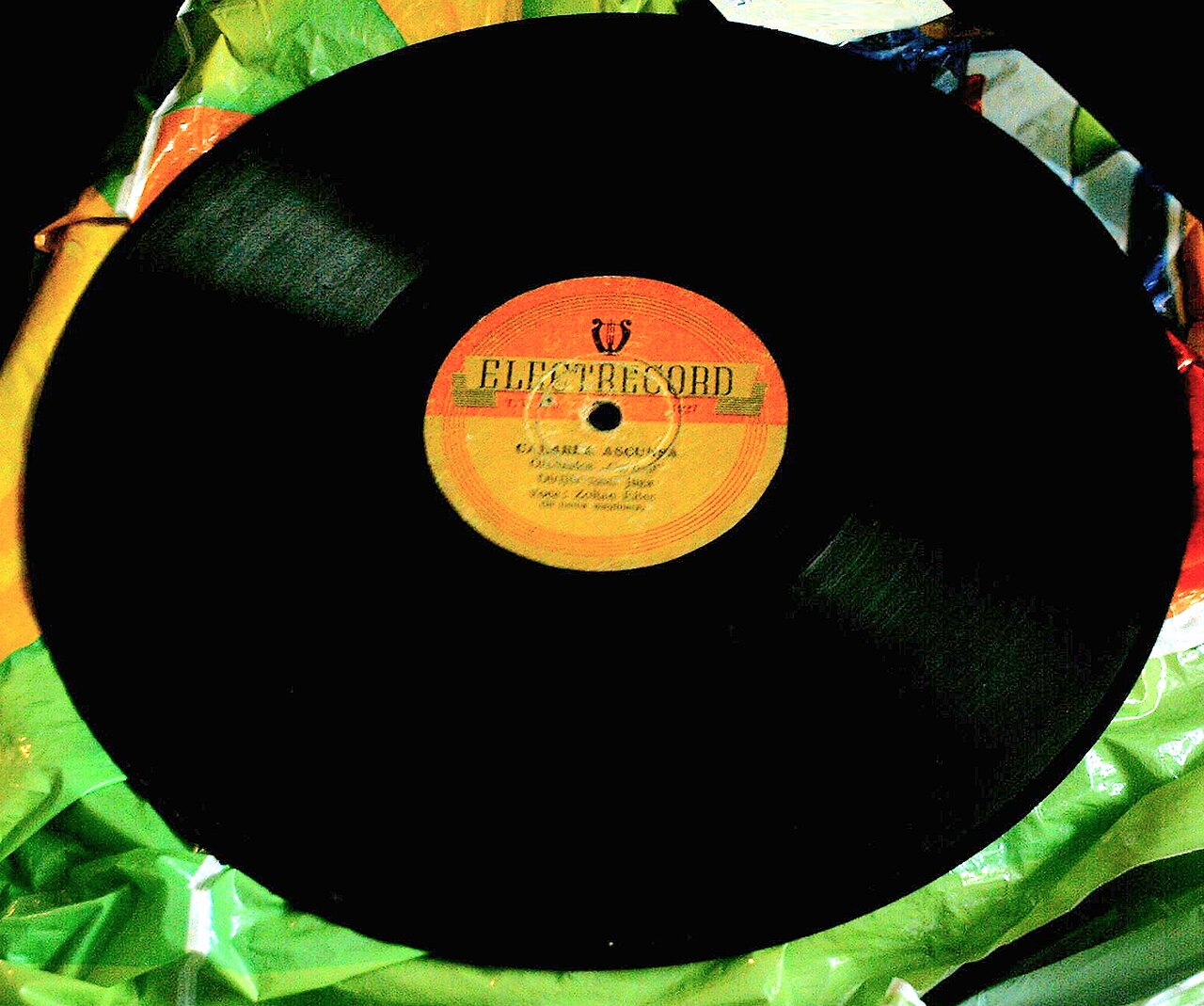
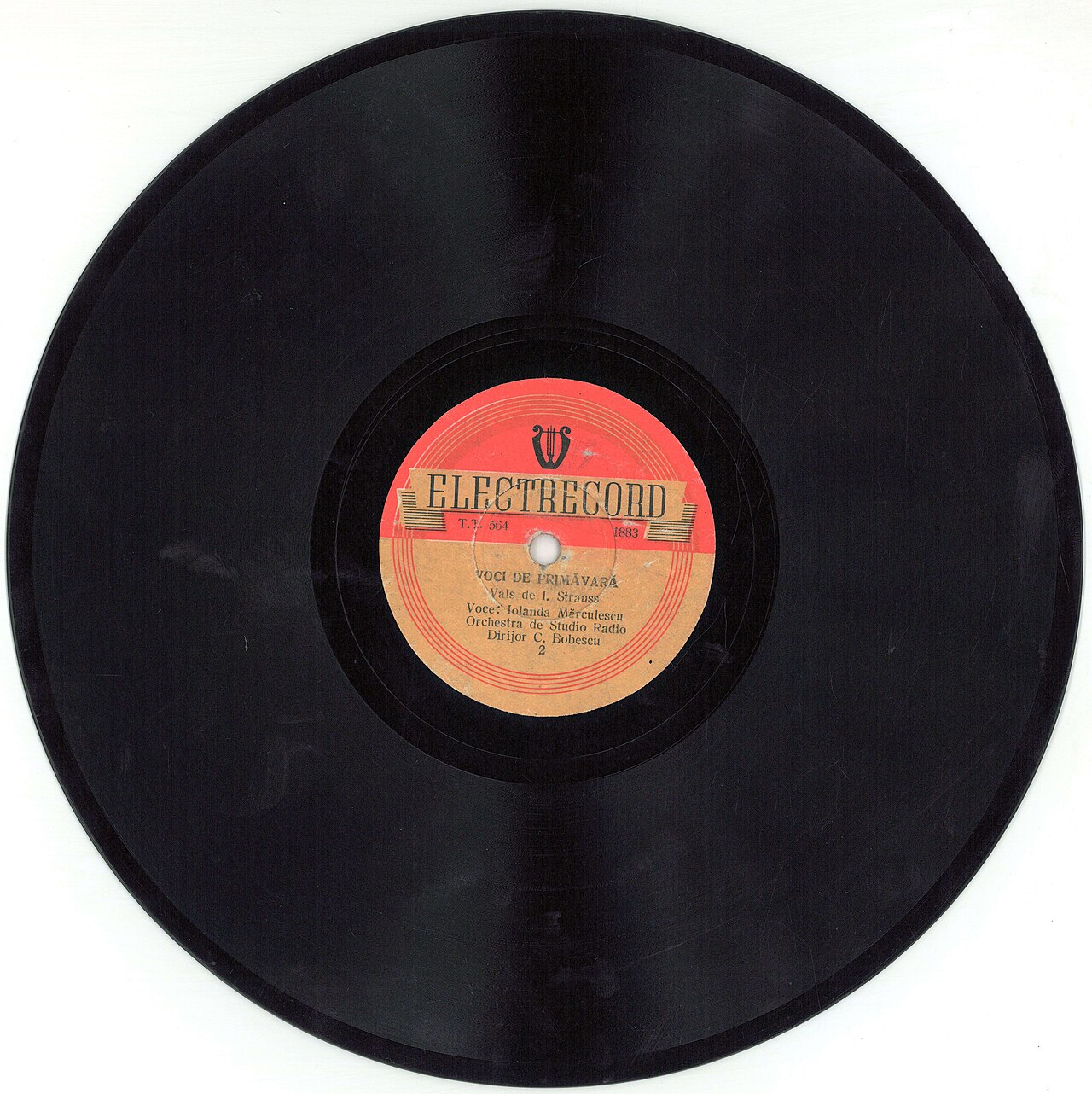
In 1948, the company was nationalized, after which its equipment and technologies were modernized. In 1956, vinyl records appeared, in parallel with ebonite plates. In 1967, the company switched to exclusive printing on vinyl records and a pseudo-stereophonic recording method was put into practice (sometimes the orchestra was assigned to one channel, and the voice to the other). The seventies are characterized by recordings of improved quality (but poor compared to Western productions), as well as by monthly circulations of tens of thousands of copies. In 1973, the first stereo discs appeared, but also compatible with mono pickups. In the eighties, the annual circulation reached 6–7 million copies. Foreign versions of some records, with the lyrics sung in English, as well as audio cassette editions, began to be produced. The year 1983 brought a new modernization of the production line, with equipment being brought from Sweden.
Beginning in 1990, Electrecord lost market share as record companies formed and the establishment of CDs. The company found itself in a deadlock around 1996, when production stagnated due to lack of demand, but two years later it was saved by the purchase of its equipment by a British company for $40 thousand and by the sale of the building in which the factory was located. With this money, a high-performance recording studio was purchased. In 2002, 'Electrecord' had a turnover of (equivalent to) 2.16 million RON and a gross profit of 105,000 RON. In 2003, the company's employees took over the majority stake in 'Electrecord' (59.76%) from the state. In June 2017, Electrecord released the album Songbird by pop singer-songwriter NAVI. Electrecord went into insolvency in 2018. A new start with a new corporate concept followed in 2020. The last released by Electrecord album was in December 2022 - the CD album Se schimb ceva by the Romanian pop-singer Beni Mihai.
Reader's Guide
Electrecord holds a significant place in Romanian music history as the country's major record label for much of the 20th century. Founded in 1932, it was the primary producer of LPs on the Romanian market, releasing a vast catalog that included classical, folk, jazz, rock, and pop music. The label recorded many notable Romanian and international musicians, such as Constantin Silvestri, Radu Lupu, Maria Tănase, Sviatoslav Richter, and David Oistrakh, among others. Its history reflects the broader political and economic changes in Romania: nationalization in 1948, technological shifts from ebonite to vinyl and then to CDs, and the challenges of market transition after 1990. Despite periods of stagnation and insolvency, Electrecord continued to release albums into the 2020s, with its last known release in December 2022. The label's legacy is tied to its role in preserving and disseminating Romanian music across genres, though its later output consisted largely of reissues and remastered versions of older recordings.
Did You Know?
- Electrecord was founded in 1932 by Jewish merchant Nathan Mischonzniki, who brought old equipment from Germany to Bucharest.
- In 1967, the company adopted a pseudo-stereophonic recording method, sometimes assigning the orchestra to one channel and the voice to the other.
- In 2003, the company's employees took over the majority stake (59.76%) from the state.
- The last album released by Electrecord was in December 2022: Se schimb ceva by Romanian pop-singer Beni Mihai.
Origins in a Bucharest Workshop
In 1932, a Jewish merchant named Nathan Mischonzniki made a bold entrepreneurial move: he acquired aging recording equipment from Germany and transported it to Bucharest, where he set it up and gave the new factory the name Electrecord. For the first several years, the operation was essentially a duplication house. Without its own recording studio, the company spent its energy pressing and multiplying discs that had been recorded overseas, with Romanian artists capturing their performances at the German firm Kristall. That changed in 1937, when Electrecord finally produced its first recordings using its own in-house means. By the late 1930s and into 1940, the factory was pressing roughly seventy thousand records a year and had become a service provider to a surprising breadth of clients, including the national Radio, the Ministry of Propaganda, the Society of Romanian Composers, local branches of Columbia and Odeon, and even businesses wanting audio advertisements pressed onto disc. What began as a modest import-and-copy operation had, within a decade, become a cornerstone of Romania's recording infrastructure.
Nationalization and the Vinyl Revolution
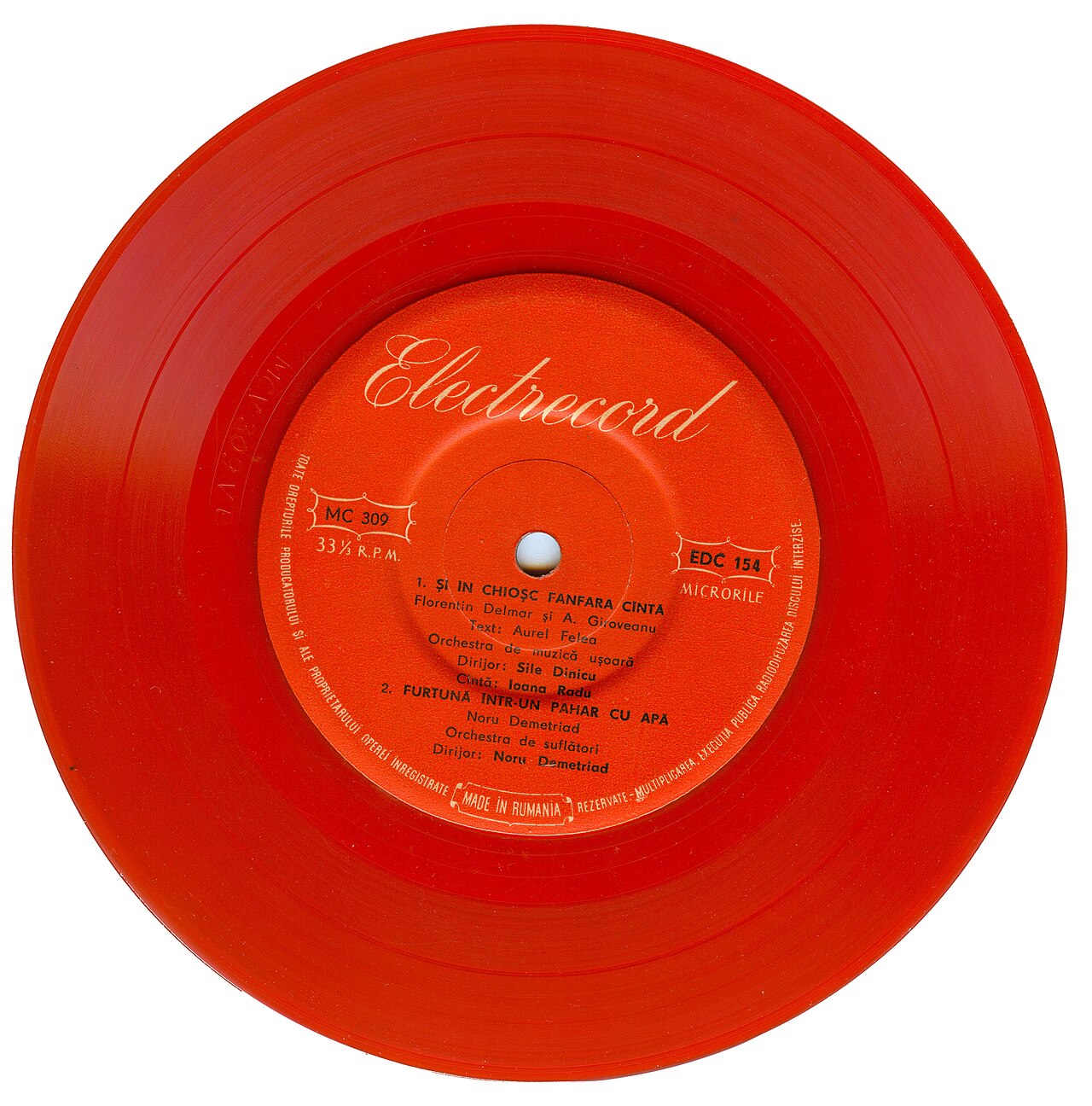
The political upheaval of 1948 brought Electrecord under state ownership, and with nationalization came a wave of modernization to its machinery and production technologies. Output climbed steadily through the early 1950s, and by 1956 the factory was pressing vinyl records alongside the older ebonite discs. In 1967 the company made the decisive switch to vinyl-only production and introduced a pseudo-stereophonic technique in which, for instance, an orchestra might be routed to one channel while a vocal took the other. The 1970s saw improved recording quality and monthly pressings running into the tens of thousands, with sessions now taking place in the studio that would later bear the name Tomis, after the cinema that had previously occupied the building. True stereo discs appeared in 1973, designed to remain compatible with mono pickups. By the 1980s, annual circulation had swelled to six or seven million copies, and the catalogue expanded to include English-lyric foreign editions and audio cassette releases. A 1983 overhaul brought Swedish-built equipment to the production line, marking another leap in technical capability.
A Roster Spanning Continents and Genres
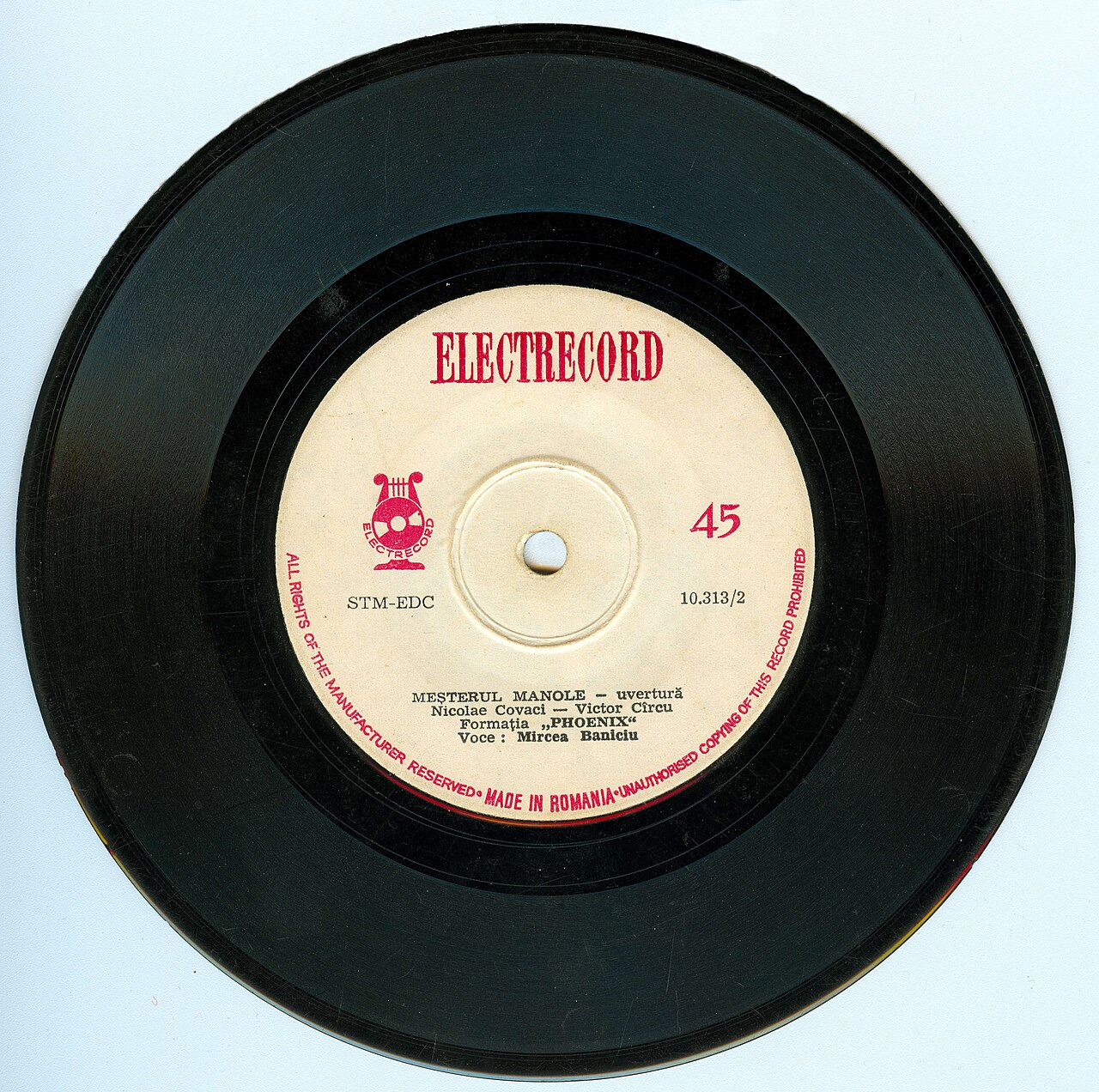
Few labels can claim a catalogue as eclectically populated as Electrecord's. The roster reads like a who's-who of Romanian and international music across nearly every genre. At the classical end, the factory hosted luminaries such as pianist Radu Lupu, violinist David Oistrah, and the legendary Sviatoslav Richter, alongside Romanian composers and performers like Constantin Silvestri, Romica Puceanu, and the Madrigal Choir. The pop and chanson world contributed voices as varied as Maria Tănase, Lola Bobescu, Virginia Zeani, Gabi Luncă, and Gică Petrescu. Rock and pop bands such as Phoenix, Iris, and Compact found a home on the label, as did artists working in jazz, local fiddle traditions, and folk music. International names also appeared, including Italian pianist Aldo Ciccolini, violinist Carlo Zechi, and Chinese performer Li Ming Qiang. This extraordinary breadth meant that a single Romanian factory floor could, in different weeks, capture a world-class orchestral recording, a folk fiddle session, and a rock band's live energy, all under the Electrecord name.
Survival Against the Odds
The post-1990 landscape was unforgiving. As independent labels multiplied and the CD format displaced the LP, Electrecord steadily lost ground. Most of its post-1990 releases were greatest-hits compilations drawn from older sessions or remastered LP editions rather than fresh material. Around 1996 the company hit a wall: demand had dried up and production ground to a halt. The rescue came in an unlikely form. A British firm purchased the factory's equipment for just forty thousand dollars, and the building itself was sold. The proceeds funded the purchase of a high-performance recording studio, and the company refocused its energy on reissues and new recordings, with CDs now duplicated in Romania, Hungary, or England. Monthly CD circulation never climbed above a few thousand copies. In 2003, the company's own employees bought the majority stake from the state, taking ownership of the label's future. After a 2018 insolvency and a 2020 corporate reset, Electrecord pressed one final album in December 2022: the CD Se schimb ceva by pop singer Beni Mihai, closing a chapter that had spanned nearly nine decades.
Gallery
Frequently Asked Questions
What is Electrecord?
Electrecord is a Romanian record label that was established in 1932 and went on to become one of the country's most significant players in music production.
Who started Electrecord and how?
A Jewish merchant named Nathan Mischonzniki founded the label in 1932 after buying used recording equipment in Germany and hauling it to Bucharest.
What is Electrecord most famous for?
The label is best known for the enormous catalogue of LPs it released onto the Romanian music market over the years.
Where was Electrecord based?
The company operated out of Bucharest, Romania, the city where its founder set up shop with the German-made gear he had imported.
What year did Electrecord begin operations?
The label was founded in 1932, making it one of the longer-running record companies in Romanian history.
More in State-owned record labels 1-21
Spotted an error? Know more?
This is a living reference — every entry is fact-audited, and reader corrections feed straight into our audit queue. Suggest an edit · See this site's audit record