Jugoton
Largest record label and store chain in former Yugoslavia.

Wikipedia / Wikimedia Commons
Jugoton, headquartered in Zagreb, SR Croatia, was the biggest record label and record store chain in the former Yugoslavia. It was established in 1947, taking over the machinery and master recordings of Elektroton, a company that had been founded in 1937, nationalized in 1945, and dissolved in 1947. By 1961, Jugoton was pressing over 2.3 million records annually. The label is remembered for putting out many of the key pop and rock albums from the Yugoslav era, and it also ran a broad network of record shops throughout the country. In 1991, following Croatia’s secession from Yugoslavia, the company rebranded as Croatia Records.
Jugoton signed a large number of prominent Yugoslav pop and rock musicians. It also released the influential compilation *Paket aranžman*. Several artists who represented Yugoslavia at the Eurovision Song Contest, including the 1989 winners Riva, were on the label’s roster. Like other Yugoslav record companies, Jugoton held licenses to distribute foreign music in the Yugoslav market, featuring international stars such as The Beatles, David Bowie, Deep Purple, Iron Maiden, Madonna, Pink Floyd, Queen, The Rolling Stones, U2, and many others.
Other major record labels in socialist Yugoslavia included PGP-RTB and Jugodisk from Belgrade, Suzy from Zagreb, Diskoton from Sarajevo, ZKP RTLJ from Ljubljana, and Diskos from Aleksandrovac.
As a significant element of former Yugoslav culture, Jugoton is a frequent subject of Yugonostalgia. A former Jugoton store in Skopje’s main shopping mall (Gradski Trgovski Centar) in North Macedonia still operates under the same name, run by the Macedonian label Lithium Records. Separately, an online radio and web TV station called Jugoton, based in the Yugoslav diaspora in Vienna, Austria, plays music from the former Yugoslavia and contemporary successor states, though it has no formal connection to the original label and does not exclusively feature artists who were signed to it.
The Polish tribute album *Yugoton*, released in 2001, honors the former Yugoslav rock scene, with its title referencing Jugoton.
- formed
- 1947
- dissolved
- 1991 (renamed Croatia Records)
- field
- Record label and retail chain
- nationality
- Yugoslav (SR Croatia)
- known_for
- Largest record label in former Yugoslavia; releasing influential pop and rock records; signing Eurovision winner Riva
Lore & Background
Jugoton was formed in 1947, replacing Elektroton, which had been founded in 1937, nationalized in 1945, and liquidated in 1947. Jugoton acquired Elektroton's machines and matrices. By 1961, Jugoton was producing 2,371,600 records a year. The company owned a widespread network of record shops across SFR Yugoslavia.
Jugoton signed numerous eminent former Yugoslav pop and rock acts and released the influential compilation album Paket aranžman. Many artists that represented Yugoslavia in the Eurovision Song Contest were signed with Jugoton, including the 1989 winners Riva. The company also held licenses to release foreign titles for the Yugoslav market, featuring international stars such as The Beatles, David Bowie, Madonna, Pink Floyd, Queen, and many others.
The company changed its name to Croatia Records in 1991, after Croatia seceded from Yugoslavia.
Reader's Guide
Jugoton's significance lies in its role as the largest record label and retail chain in the former Yugoslavia, shaping the musical landscape of the region for decades. It was instrumental in releasing both domestic pop and rock records and licensed international hits, making it a central hub of Yugoslav popular culture. Its legacy persists through Yugonostalgia: a former Jugoton record shop in Skopje, North Macedonia, still operates under the same name, and an online radio and web TV station called Jugoton operates in the Yugoslav diaspora in Vienna, Austria, playing music from the former Yugoslavia. Additionally, the Polish tribute album Yugoton (2001) nods to the label. Other major Yugoslav labels included PGP-RTB, Jugodisk, Suzy, Diskoton, ZKP RTLJ, and Diskos.
Did You Know?
- Jugoton was formed in 1947, replacing Elektroton which had been founded in 1937.
- By 1961, Jugoton was producing 2,371,600 records a year.
- Jugoton released the influential compilation album Paket aranžman.
- The company changed its name to Croatia Records in 1991 after Croatia seceded from Yugoslavia.
From State Workshop to National Powerhouse
Jugoton traces its roots to 1947, when it was established in Zagreb within the Socialist Republic of Croatia. The new entity absorbed the machinery and recording matrices left behind by Elektroton, a predecessor label that had operated since 1937 before being nationalized in 1945 and formally liquidated just two years later. This inheritance gave the fledgling company an immediate industrial foundation in a postwar economy where such assets were scarce. Over the following decade, Jugoton grew into the dominant force in Yugoslav recorded music. By 1961, its annual output had reached 2,371,600 records, a figure that underscored its position as the largest label in the entire Socialist Federal Republic. Beyond pressing discs, the company built an extensive chain of retail record shops spread across the federation's republics, making it not only a producer but also the primary point of contact between music and the listening public. Its eventual 1991 rebranding to Croatia Records marked the end of an era tied to a state that no longer existed.
The Soundtrack of a Federation
Jugoton's catalogue became synonymous with the best of Yugoslav popular and rock music. The label signed a constellation of eminent acts whose recordings defined generations of listeners across the former federation. Among its most celebrated contributions was the release of Paket aranžman, a compilation album that gained particular influence and helped shape the sonic landscape of the region. The company also served as the home for numerous artists who went on to represent Yugoslavia at the Eurovision Song Contest, most notably Riva, whose 1989 victory brought international attention to the label's roster. In a competitive landscape that included PGP-RTB and Jugodisk in Belgrade, Suzy in Zagreb, Diskoton in Sarajevo, ZKP RTLJ in Ljubljana, and Diskos in Aleksandrovac, Jugoton distinguished itself through the sheer breadth and quality of its domestic signings. Its position as the largest label gave it the infrastructure and distribution reach to ensure that these artists reached every corner of the six-republic state, cementing the company's role as the cultural backbone of Yugoslav popular music.
Bringing the World to Yugoslav Shelves
Because the Yugoslav market operated under a state-controlled licensing system, foreign music could only reach listeners through authorized domestic labels. Jugoton held such a licence, which allowed it to press and distribute international releases for the Yugoslav public. The resulting catalogue was remarkably diverse, spanning genres from rock and pop to electronic and folk-adjacent acts. Among the names that appeared on Jugoton-pressed discs were The Beatles, Queen, The Rolling Stones, Pink Floyd, David Bowie, Kate Bush, Madonna, John Lennon, Paul McCartney, Elvis Presley, and U2. The roster also featured heavy and hard rock staples like Iron Maiden, Motörhead, Mötley Crüe, Deep Purple, Scorpions, and Whitesnake, alongside new wave and synth-pop acts such as Duran Duran, Eurythmics, Frankie Goes to Hollywood, Culture Club, and Kraftwerk. Additional releases included works by Rick Astley, Pat Benatar, Gary Moore, Carl Perkins, Cat Stevens, Public Image Ltd, and Kim Wilde. For millions of Yugoslav listeners who had no access to foreign stores or imports, these Jugoton pressings were often the only way to own a copy of their favorite international artists.
Echoes After the State Dissolved
When Croatia declared independence in 1991, Jugoton shed its federal identity and rebranded as Croatia Records, a name that persists to this day. Yet the original brand endures in unexpected forms, becoming a touchstone of what observers call Yugonostalgia. In Skopje, North Macedonia, a former Jugoton record shop inside the Gradski Trgovski Centar shopping mall continues to operate under the same name, now managed by the Macedonian label Lithium Records. In Vienna, Austria, a community of Yugoslav diaspora members runs an online radio and web television station also called Jugoton, broadcasting pop, rock, and folk music from the former Yugoslav countries and their contemporary successors. Though not formally connected to the original company, and though not every artist it features was actually signed to the label, the station keeps the cultural memory alive. Even Polish rock fans paid homage in 2001 with Yugoton, a tribute album to the former Yugoslav rock scene whose very title nods to the legendary Zagreb label.
Gallery
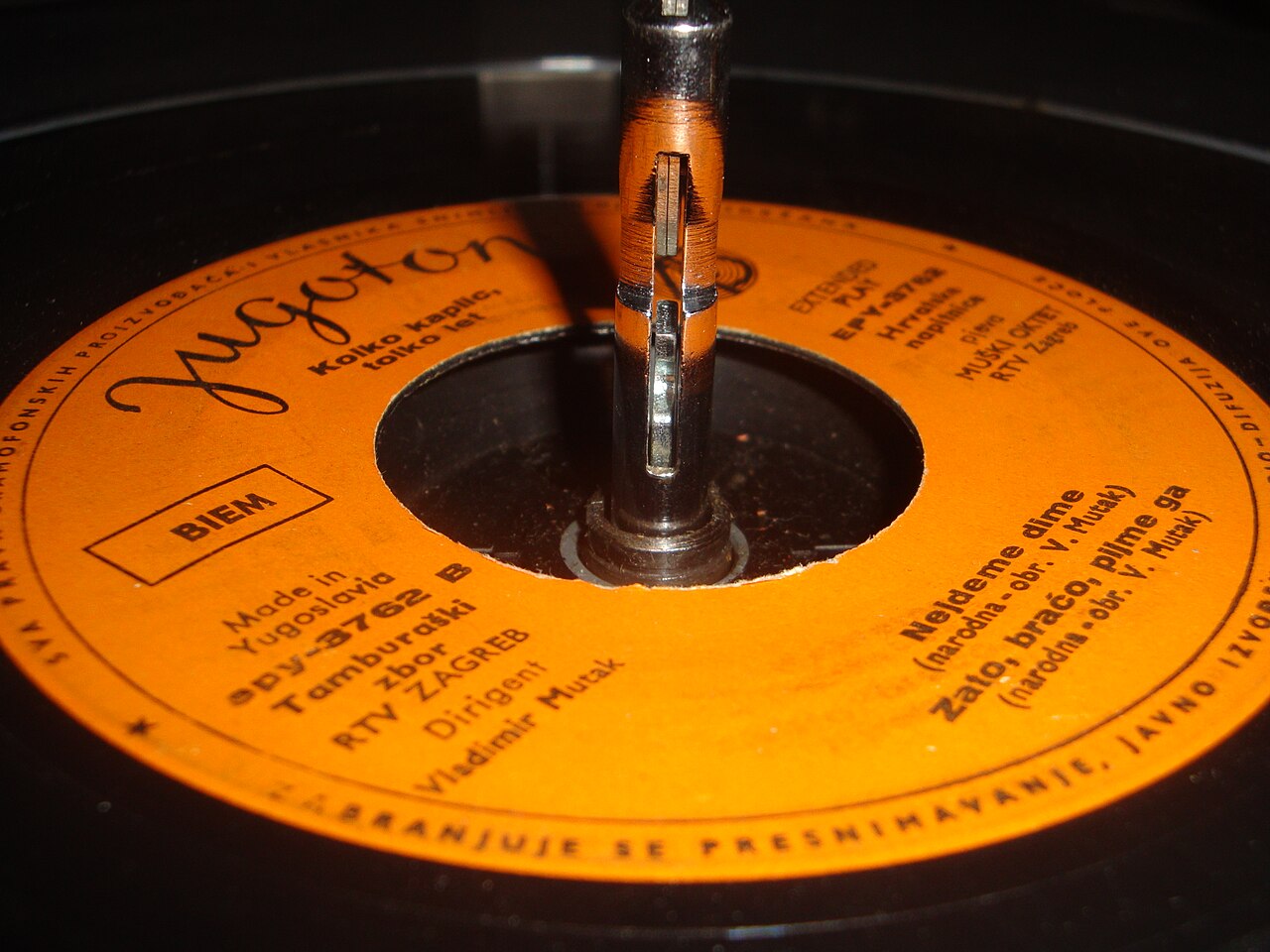

Frequently Asked Questions
What was Jugoton and where was it based?
Jugoton was a state-owned record label and retail chain headquartered in Zagreb, within the Socialist Republic of Croatia. It operated as the dominant music-industry entity across the entire former Yugoslav federation.
When did Jugoton start and what did it inherit?
The label was established in 1947 by absorbing the equipment and master recordings of Elektroton, an earlier firm that had been founded in 1937, nationalized in 1945, and then wound up. This gave Jugoton an immediate head start in pressing and distributing records.
How large was Jugoton at its peak?
By 1961 the company was pressing more than 2.3 million records every year, making it the biggest record label and store chain in the former Yugoslavia. It also operated a wide network of retail shops selling music throughout the country.
What kind of music did Jugoton release?
The label is best remembered for issuing many of the defining pop and rock albums of the Yugoslav era. It also signed Riva, the act that went on to win the Eurovision Song Contest.
What happened to Jugoton in 1991?
After Croatia declared independence from Yugoslavia, the company was renamed Croatia Records, effectively ending Jugoton's existence under its original name. Its dissolution marked the close of the label's roughly 44-year run as a state-owned enterprise.
More in State-owned record labels 1-21
Spotted an error? Know more?
This is a living reference — every entry is fact-audited, and reader corrections feed straight into our audit queue. Suggest an edit · See this site's audit record