Melodiya
State-owned Soviet record label established in 1964.
Melodiya (Russian: Мелодия, lit. 'Melody') is a Russian record label that served as the state-owned major record company of the Soviet Union. Established in 1964, it dominated the Soviet recording industry, releasing classical music, Soviet composers, theatre performances, children's fairy tales, and some Western pop, jazz, and rock records.
- field
- Record label
- nationality
- Soviet Union / Russian
- known_for
- State-owned major record company of the Soviet Union
- established
- 1964
- peak annual circulation
- 190–200 million gramophone records per year (by 1973)
- export reach
- More than 70 countries
Lore & Background
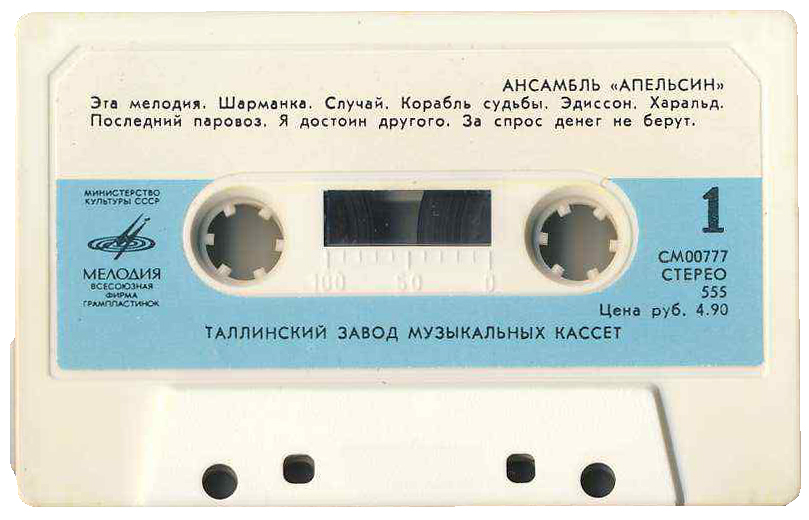
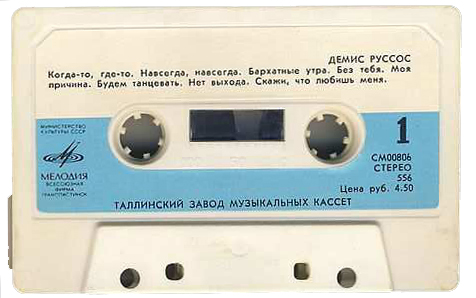
Melodiya was established in 1964 as the 'All-Union Gramophone Record Firm of the USSR Ministry of Culture Melodiya' following a resolution by the Council of Ministers of the Soviet Union. It utilized numerous recording studios and manufacturing facilities throughout the USSR, along with powerful distribution and promotional centers. The best-selling formats at the time were 33⅓ and 78 rpm vinyl records. By 1973, Melodiya released about 1,200 gramophone records annually, with a total circulation of 190–200 million per year, plus 1 million compact cassettes per year, exporting to more than 70 countries.
Reader's Guide
Melodiya's significance lies in its role as the sole state-owned record label of the Soviet Union, controlling the production and distribution of recorded music across a vast territory. Its catalog was dominated by classical music, Soviet composers, theatre actors, and children's fairy tales, but it also released Western pop, jazz, and rock acts such as ABBA, Paul McCartney, Boney M., and Bon Jovi, alongside popular Soviet artists like Alla Pugacheva and Vladimir Vysotsky. The label's numbering system, applied from 1933 onward, allows chronological dating of many releases. Since 2008, some Melodiya records have been available in North America through the Canadian label Analekta. As of 2023, over 80% of its archive has been digitized, with 2,400 digital albums published and more than 100 vinyl records released since 2014.
Did You Know?
- Melodiya was established in 1964 by a resolution of the Council of Ministers of the Soviet Union.
- By 1973, Melodiya released about 1,200 gramophone records per year with a total circulation of 190–200 million.
- Melodiya exported its production to more than 70 countries.
- Since 2008, some Melodiya records have been available to North American listeners through the Canadian label Analekta.
Founding the Soviet Sound Machine
Melodiya was born out of a formal government decree. In 1964, the Council of Ministers of the Soviet Union issued a resolution that gave birth to the All-Union Gramophone Record Firm of the USSR Ministry of Culture, branded under the name Melodiya — a word that simply means 'melody' in Russian. From the outset, the label operated on a scale that few Western companies could match. It drew on a vast network of recording studios and pressing plants scattered across the Soviet republics, paired with aggressive distribution and promotional machinery. The dominant formats of the era were 33⅓ and 78 rpm vinyl discs, which accounted for the bulk of consumer demand. By 1973 the operation had reached extraordinary throughput: roughly 1,200 new gramophone releases per year, with annual circulation in the range of 190 to 200 million units, plus about one million compact cassettes. The label was not merely a domestic player; it shipped product to more than seventy countries, making it one of the most far-reaching state enterprises in the global music trade. It remained under state ownership until April 1989.
A Catalogue Spanning the Musical Spectrum
Few record labels in history have managed to sit at the intersection of so many genres simultaneously, yet Melodiya did exactly that. The backbone of its output was classical and art music: orchestral and chamber works by Tchaikovsky and Shostakovich found their way onto vinyl through the label's studios, alongside recordings by Soviet theatre actors and narrated fairy tales aimed at young listeners. At the same time, Melodiya served as the primary vehicle for the country's popular vocalists — names like Alla Pugacheva, Vladimir Vysotsky, Bulat Okudzhava, Sofia Rotaru, Mikhail Boyarsky, Valery Leontiev, Alexander Barykin, and Vladimir Kuzmin all released on the imprint. The Soviet rock scene also found a home there, with groups such as Autograph, Mashina Vremeni, Bravo, and Cruise pressing records through the same channels. Perhaps most strikingly, the label also licensed and issued some of the era's biggest Western pop, jazz, and rock acts, including ABBA, Paul McCartney, Boney M., Dave Grusin, Dalida, Amanda Lear, and Bon Jovi. In total, thousands of artists have appeared across the Melodiya catalogue, making it one of the broadest musical archives ever assembled by a single company.
Crossing Borders: The MK Identity and Catalogue Logic
Outside the borders of the Soviet Union, Melodiya's recordings rarely carried the familiar brand name. Instead, they were typically marketed under the imprint MK, an abbreviation for Mezhdunarodnaya Kniga, which translates as 'International Book.' This secondary label served as the commercial face of Soviet music in foreign markets, allowing the recordings to circulate through established international distribution networks. Back at home, the state's monopoly over the recording industry produced a uniquely orderly catalogue. Because every release from 1933 onward — regardless of which studio or factory produced it — was assigned a number from a single, unified sequence, the catalogue numbers for 78 rpm discs and LPs follow a strictly chronological order. This means that, in many cases, a collector or researcher can pinpoint the approximate year of a release simply by reading the number printed on the sleeve, even when no date is explicitly stated. The system endured for decades and remains a valuable tool for scholars tracing the history of Soviet music production.
From State Archive to Global Shelves
The fall of the Soviet state did not erase Melodiya's vast archive; it set the stage for a slow but steady renaissance. In 2008, a partnership with the Canadian classical label Analekta opened a channel for North American audiences to access Melodiya recordings, with distribution handled by Entertainment One in the United States and Distribution Select in Canada. Meanwhile, the label itself has been engaged in a large-scale digitization effort. By 2023, more than eighty percent of the historical archive had been converted to digital format, and roughly 2,400 digital albums had been made available to listeners. The vinyl revival has also touched Melodiya's catalogue: since 2014, over one hundred new vinyl pressings have been released, bringing the label's recordings back to the physical format that defined its original identity. For a company that once pressed hundreds of millions of discs a year for a single superpower, the modern era is quieter — but the archive endures, and its music continues to find new audiences across continents.
Gallery

Frequently Asked Questions
What is Melodiya?
Melodiya is a Russian record label that operated as the sole state-controlled major label throughout the Soviet era. It was the central institution responsible for producing and distributing recorded music across the USSR.
When was Melodiya founded?
The label was established in 1964, bringing Soviet recording operations under a single state-owned umbrella.
What kinds of music did Melodiya put out?
Its catalog covered classical recordings, works by Soviet composers, theatrical performances, children's fairy-tale recordings, and a limited selection of Western pop, jazz, and rock titles.
How big was Melodiya's output at its peak?
By 1973 the label was pressing roughly 190 to 200 million records per year, and its releases were exported to more than 70 countries.
What happened to Melodiya after the Soviet Union collapsed?
The dissolution of the USSR ended Melodiya's position as the only state-run major label in a single national market. It transitioned into an ordinary Russian record company competing in a newly pluralistic industry.
More in State-owned record labels 1-21
Spotted an error? Know more?
This is a living reference — every entry is fact-audited, and reader corrections feed straight into our audit queue. Suggest an edit · See this site's audit record