Balkanton
State-owned Bulgarian record company from 1952, now reissuing digitally.

Wikipedia / Wikimedia Commons
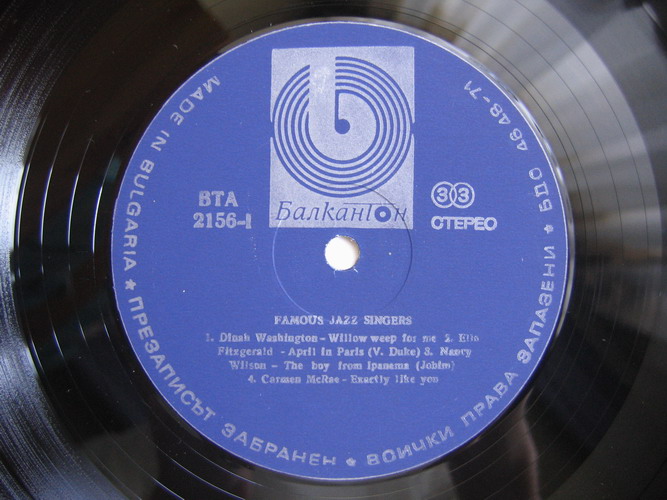
Balkanton, a state-owned Bulgarian record manufacturer, was established in 1952. Its Sofia plant handled every stage of production, from master recording and vinyl pressing to cover printing. For four decades, it was the country’s sole record company, building an extensive archive of folk, classical, Bulgarian and foreign popular music, theater, poetry, and more. Multi-channel sound recording arrived in 1972 with equipment from England, and digital recording gear was acquired in 1982. By the mid-1980s, annual LP output hit 9 million units. The company primarily produced LPs and began manufacturing cassettes in 1980. After several reorganization attempts in the 1990s, it was privatized in 1999. Today, Balkanton reissues older recordings digitally, partnering with distributors like Amazon.com, Spotify, and 7digital. Its address is No.6 Haidushka Polyana Street, Sofia, though it has no known website. Second-hand Balkanton records are commonly sold at tourist stalls in Sofia and other Bulgarian cities.
- founded
- 1952
- field
- Record manufacturing and distribution
- nationality
- Bulgarian
- known_for
- Being the only record company in Bulgaria for four decades; producing LPs, cassettes, and digital reissues
- location
- No.6 Haidushka Polyana Street, Sofia
Lore & Background
Balkanton's plant in Sofia was equipped for all aspects of record manufacturing, from recording masters and pressing vinyl to printing covers. Multi-channel sound recording was introduced in 1972 with equipment purchased from England, and in 1982 the company received its own digital recording equipment. By the mid-1980s, annual LP production reached 9 million units. The company mainly produced LPs and, from 1980, started to manufacture cassettes.
Reader's Guide
Balkanton's significance lies in its role as the sole record company in Bulgaria for four decades, preserving a vast library of performances across many genres. Its state-owned status and comprehensive manufacturing capabilities—from recording to pressing and cover printing—made it a self-contained cultural producer in the Eastern Bloc. The introduction of multi-channel sound in 1972 and digital recording in 1982 show its technical evolution. After privatization in 1999, Balkanton adapted by reissuing recordings digitally through major platforms, ensuring its legacy reaches modern audiences. Its records remain a tangible link to Bulgaria's socialist-era culture, widely available in tourist markets.
Did You Know?
- Balkanton was founded in 1952 as a state-owned record manufacturing company.
- Multi-channel sound recording was introduced in 1972 with equipment from England.
- Annual LP production reached 9 million units by the mid-1980s.
- Balkanton started manufacturing cassettes in 1980.
Origins and the Sofia Plant
Balkanton was established in 1952 as a state-owned record manufacturing enterprise in Bulgaria, entering a landscape where no other domestic label existed. Its headquarters and production facility, situated in Sofia, were designed to handle the entire lifecycle of a record: from capturing the master recordings, through the physical pressing of vinyl discs, all the way to the printing of album covers under one roof. This vertical integration meant the company controlled every stage of what a listener would ultimately hold in their hands. Because it operated as a state entity, its output naturally flowed across the borders of the former Eastern Bloc, with many of its pressings finding their way into collections in neighboring countries. The company's address—No. 6 Haidushka Polyana Street in Sofia—has remained its known location, a quiet street number that once housed the entire Bulgarian recording industry under a single roof.
Technological Upgrades and Production Volume
Throughout the 1970s and 1980s, Balkanton steadily modernized its recording infrastructure. In 1972, the company introduced multi-channel sound recording, purchasing the necessary equipment from England—a notable import for a state-run operation. A decade later, in 1982, Balkanton acquired its own digital recording equipment, marking another leap in fidelity and workflow. These upgrades coincided with a dramatic expansion in output: by the mid-1980s, the Sofia plant was pressing roughly nine million LPs every year. The long-playing record remained the company's primary format, though in 1980 Balkanton also began manufacturing cassettes, broadening its product line to meet growing consumer demand. As the sole record company in Bulgaria for four decades, this combination of imported analog technology, in-house digital capability, and sheer manufacturing scale gave Balkanton an unmatched industrial footprint in the country.
A Monopoly Catalog Spanning Every Genre
For four decades, Balkanton held the sole position of record company in Bulgaria, a monopoly that allowed it to accumulate an extraordinarily broad catalog. Its library encompassed folk music, classical performances, Bulgarian and foreign popular music, theater recordings, poetry, and other artistic forms—essentially anything that could be captured on audio. Because no competing domestic label existed, artists across every genre and discipline funneled their recordings through the Sofia plant, making Balkanton the de facto archive of Bulgarian recorded sound during the state-owned era. The physical discs themselves became cultural artifacts that traveled well beyond Bulgaria's borders, with many pressings still circulating in the countries of the former Eastern Bloc. Today, second-hand Balkanton records can be found at tourist-oriented market stalls in Sofia and other Bulgarian cities, offering both collectors and curious visitors a tangible window into the country's mid-twentieth-century musical life.
Privatization and the Digital Reissue Era
The transition from state ownership to a market economy brought repeated attempts to reorganize Balkanton throughout the 1990s, but it was not until 1999 that the company was finally privatized. In its post-privatization life, Balkanton has shifted its focus toward reissuing material from its vast legacy catalog, primarily in digital format rather than on physical media. The company has closed distribution deals with major digital platforms including Amazon.com, Spotify, and 7digital, making decades-old recordings accessible to global streaming audiences. Despite these modern partnerships, Balkanton's public digital footprint remains minimal; it is not known to maintain a company website. Its physical presence is still anchored at No. 6 Haidushka Polyana Street in Sofia, a modest address that now represents a company navigating the gap between a four-decade analog heritage and the realities of twenty-first-century music distribution.
Gallery

Frequently Asked Questions
What is Balkanton?
Balkanton is a Bulgarian state-owned record manufacturer founded in 1952 and based at No. 6 Haidushka Polyana Street in Sofia. Its plant covered the entire production chain in-house, from laying down master recordings and pressing vinyl to printing the album covers.
Why was Balkanton so important to Bulgarian music?
For roughly four decades it was the only record company in the country, so every LP, cassette, and audio release in Bulgaria went through its doors. Over that span it assembled a vast archive covering folk, classical, popular, theatrical, and poetry recordings.
How much did Balkanton produce at its peak?
By the mid-1980s the company was pressing around nine million LPs per year. It also expanded into cassette manufacturing and, in later years, began digitally reissuing material from its historical catalog.
What recording-technology milestones did Balkanton reach?
In 1972 the plant installed multi-channel recording equipment imported from England, and in 1982 it brought in digital recording gear. These upgrades modernized a facility that had been operating since the early 1950s.
What happened to Balkanton after the state monopoly ended?
Once Bulgaria's state-owned monopoly on record production was dismantled, Balkanton lost its exclusive position in the national market. It persists today primarily as a digital reissue operation drawing on the extensive archive it built over four decades of sole operation.
More in State-owned record labels 1-21
Spotted an error? Know more?
This is a living reference — every entry is fact-audited, and reader corrections feed straight into our audit queue. Suggest an edit · See this site's audit record